

Co-Founders of Manufacturing Company Tap Uncommon Exit Strategy
Article from BizNewsPA
Written by Joel Berg
May 13, 2026
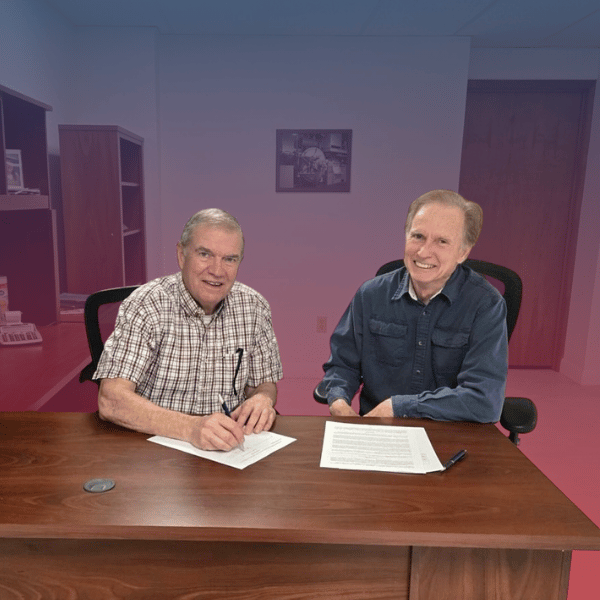
Tim Horning, left, and Greg Kimble, co-founders of Signature Vacuum Furnaces, are selling their company to a trust benefitting employees. (photo/submitted)
THANK YOU to BizNewsPA for allowing EOX to share this article with our readers!
After several would-be buyers took a pass on their manufacturing business, Tim Horning and Greg Kimble found an option that appealed to them far more than closing up and walking away from the company they built over a quarter century.
Horning and Kimble decided to sell Signature Vacuum Furnaces to its roughly 15 employees.
“It just seemed like a good fit,” said Horning.
The two entrepreneurs are not the first to sell a company to employees. But they are one of very few in the U.S. to pick a deal structure known as an employee ownership trust – and they appear to be the first in Pennsylvania, according to Kevin McPhillips, executive director of the Pennsylvania Center for Employee Ownership.
“It allowed them to, over time, get paid out for the business. It allowed them to keep their legacy. It allowed them to take care of the employees and make sure that they had jobs going forward,” McPhillips said. “And my experience has always been that people [who] engage in employee ownership, they want a liquidity event. There’s no question about that. But they want something else too.”
How does it work: Under an EOT, business owners sell their companies to trusts that operate for the benefit of employees, often through some form of profit sharing. The transactions are typically funded through loans and/or seller financing.
The structure is relatively common in the United Kingdom, which is home to about 2,500 employee ownership trusts, or EOTs.
There are about 40 EOTs in the U.S., according to a February report by the U.S. Department of Labor.
Horning and Kimble initially discussed another option for Signature Vacuum, a Crawford County-based company with about $3 million in annual revenue.
That would be the employee stock ownership plan, or ESOP, a more common path to employee ownership. There are more than 6,400 ESOPs in the U.S., according to the National Center for Employee Ownership.
But the structure would not have been a good fit for Signature, said Jeff Parnell, an Erie-based consultant who worked with the two owners on their transition plan.
Why not: ESOPs can be more costly, making them a better alternative for bigger companies, said Parnell, who was a C-suite executive for three decades before he turned to consulting.
As he explored options for Signature, Parnell connected with McPhillips and then with an organization called Common Trust that specializes in EOT transactions.
“They are rock stars in this space,” said Parnell, who does business as JHP Advisors.
The background: Horning and Kimble met in the 1970s and connected over shared values and beliefs while working for the same manufacturer in northeastern Pennsylvania.
They eventually moved on to other endeavors but reconnected in the 1990s.
Kimble was working as an independent manufacturers’ representative for several companies and, seeing a need in the market, approached Horning about starting a business to make industrial furnaces.
They incorporated Signature Vacuum in 2002 and began building their first furnace right on the customer’s floor, with customer financing, Horning said.
They eventually found vacant industrial space in Adamsville, about 50 miles south of Erie.
“We bought it for a song, and it has been a godsend,” said Kimble.
The company makes furnaces used in industrial processes, primarily for metals and ceramics.
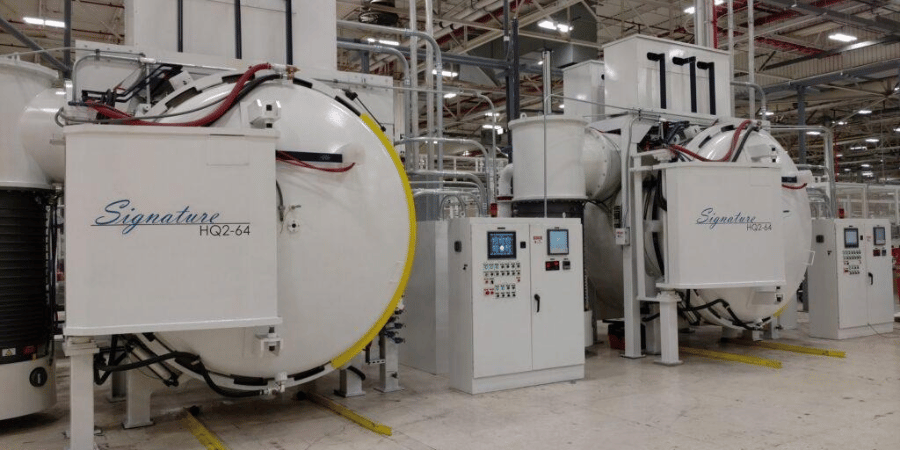
An example of the kind of industrial furnaces made by Signature Vacuum Furnaces. (photo/submitted)
They started discussing succession plans about two or three years ago as Kimble began eyeing retirement. They had no children interested in the business.
Kimble has already sold 10% of his shares to the trust, and the two owners plan to sell more over time.
Parnell, meanwhile, is helping Signature’s employees embrace the new model. He works with them to find their voices, for example, and weigh in with their own ideas for the company.
“You don’t want it to be a transaction that sounds good with no real meat behind it,” he said. “My whole approach was, let’s make sure this sticks and it gels.”
The trend: Millions of baby boomer business owners are expected to retire in the years ahead.
McPhillips said he has heard from state and local officials worried about what might happen to their companies — and the local economies that rely on them.
“They’re realizing that there’s this hole in the boat, and they’re trying to figure out what to do about it,” McPhillips said.
An EOT is an option for many smaller businesses, he said. But the structure may remain something of a niche until it draws stronger backing from lenders, such as banks, the SBA and community development financial institutions, McPhillips said. The first EOT in the U.S. was born just 12 years ago.
“The kinds of funding organizations that would support these don’t understand it,” McPhillips said. “It’s new.”
SHARE THIS POST
Because EVERYONE, EVERYWHERE needs to know about employee ownership